 April 30, 2026
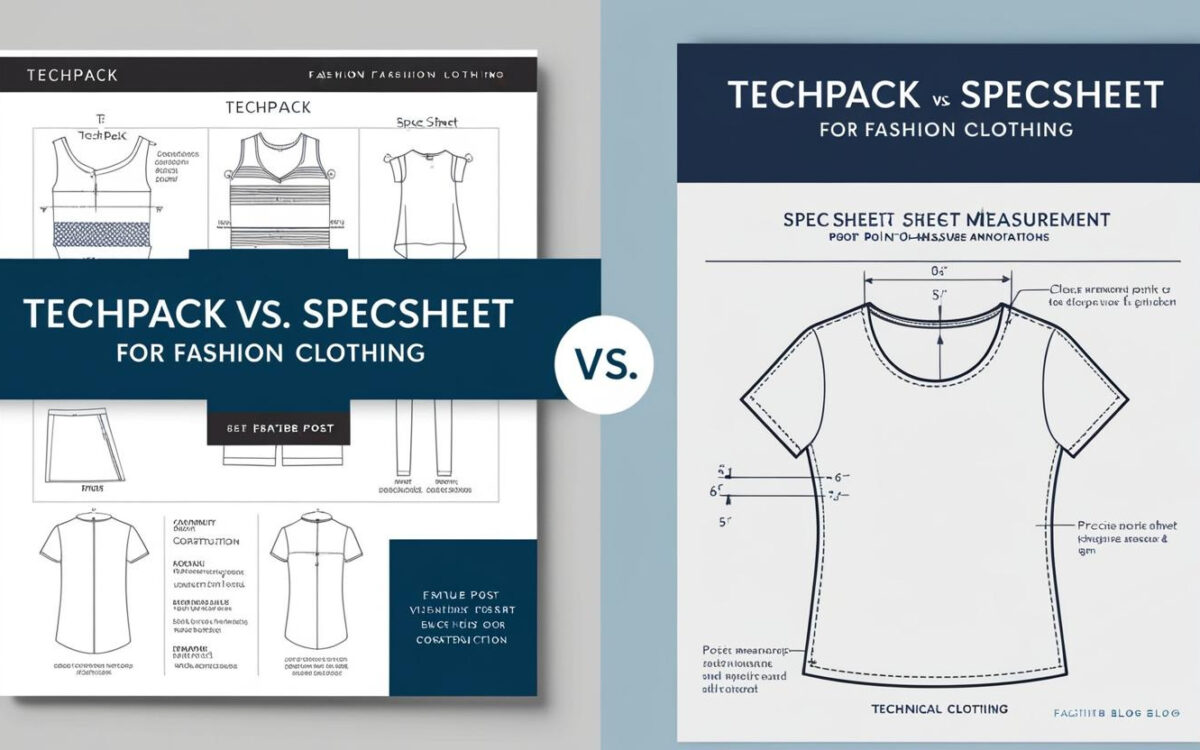
In the fashion industry, precise communication between designers, manufacturers, and suppliers is essential to ensuring a successful product. Two critical documents used in this process are tech packs and spec sheets. While both serve as essential tools in garment production, they have distinct purposes, and understanding their differences can help brands streamline their production process efficiently.
In this blog, we will break down the differences between tech packs and spec sheets, explain their roles, and discuss when and how to use them effectively.
What is a Tech Pack?
A tech pack (technical package) is a comprehensive document that serves as a blueprint for a garment. It contains all the necessary details required for manufacturers to produce a design accurately.
Key Components of a Tech Pack:
- Technical Sketches: Flat sketches and CAD drawings with front, back, and side views of the garment.
- Fabric and Material Specifications: Details about fabric type, composition, weight, and performance properties.
- Colorways and Pantone Codes: Specifications for different color options.
- Measurement Specifications and Size Grading: Detailed measurement charts with tolerance levels.
- Construction Details: Instructions on seams, stitching, and finishing techniques.
- Trims and Accessories: Information on zippers, buttons, labels, and embellishments.
- Bill of Materials (BOM): A list of all materials required to create the garment.
- Production Guidelines: Quality control standards, care labels, and packaging instructions.
A tech pack acts as a comprehensive guide, ensuring that the manufacturer understands the designer’s vision, maintains consistency, and produces garments that meet quality standards.
What is a Spec Sheet?
A spec sheet (specification sheet) is a more concise document that primarily focuses on the garment’s measurements and construction details. It serves as a reference guide for ensuring accurate sizing and fit during production.
Key Components of a Spec Sheet:
- Measurement Chart: A breakdown of measurements for each size, including length, width, sleeve length, and other key dimensions.
- Tolerance Levels: Acceptable margins for measurement variations during production.
- Grading Rules: How measurements change across different sizes.
- Fabric and Material Details (Optional): Some spec sheets include basic material descriptions.
- Construction Notes: Basic stitching and finishing instructions.
A spec sheet is primarily used for quality control and ensures that garments are produced with accurate measurements and consistent fit.
Key Differences Between Tech Packs and Spec Sheets
|
Feature |
Tech Pack |
Spec Sheet |
| Purpose | Comprehensive production guide | Focuses on measurements and fit |
| Includes Technical Sketches? | Yes | No |
| Contains Material and Fabric Details? | Yes | Sometimes (basic details) |
| Includes Trims & Accessories? | Yes | No |
| Covers Stitching & Construction Details? | Yes | Basic notes only |
| Includes Bill of Materials? | Yes | No |
| Used for Quality Control? | Yes | Yes |
| Primary Users | Designers, manufacturers, suppliers | Pattern makers, quality control teams |
When to Use a Tech Pack vs. a Spec Sheet?
Use a Tech Pack When:
- You are in the early stages of product development and need to communicate a detailed vision to manufacturers.
- You want to ensure design accuracy and consistency across production runs.
- You need a complete breakdown of materials, trims, and construction details.
- You are working with new manufacturers and need to provide them with all the necessary production guidelines.
Use a Spec Sheet When:
- You are in the sample review stage and need to check garment measurements and fit.
- Your primary concern is ensuring that production meets size accuracy and grading requirements.
- You are working with an established factory that already has other garment details and only needs measurement guidelines.
Why Every Fashion Brand Needs Both
While tech packs and spec sheets serve different purposes, they complement each other in the production process. A tech pack provides the full blueprint for manufacturing a garment, while a spec sheet ensures precise measurements and fit. Using both documents effectively helps brands minimize production errors, reduce costs, and maintain quality control.
Conclusion
For fashion brands looking to scale their production efficiently, understanding the difference between tech packs and spec sheets is crucial. A tech pack ensures design consistency and production accuracy, while a spec sheet guarantees precise fit and measurement control.
By leveraging both, fashion brands can improve communication with manufacturers, maintain high-quality standards, and streamline the production process, leading to better products and stronger brand credibility.