 April 30, 2026
Sustainability has become a critical focus in the fashion industry, as brands seek to reduce their environmental impact and create more ethical supply chains. While many discussions revolve around sustainable materials and ethical labor, one of the most overlooked yet powerful tools for sustainability is the tech pack.
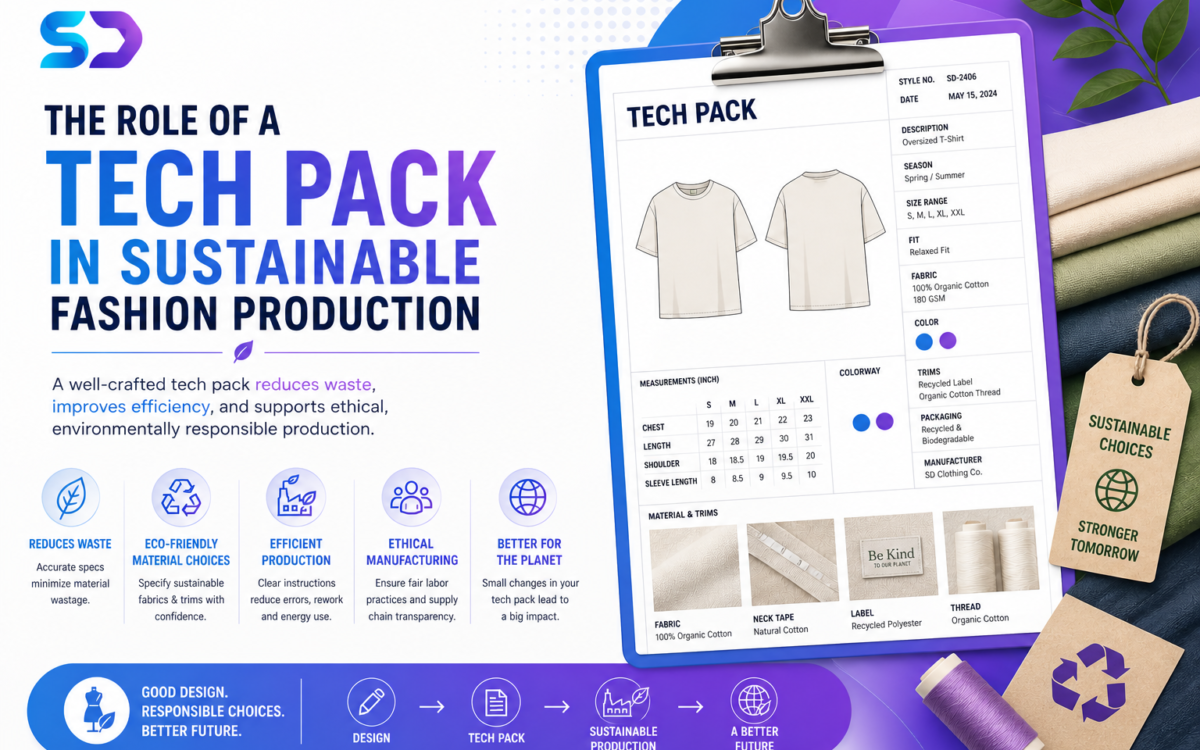
A well-prepared tech pack (technical package) plays a crucial role in sustainable fashion production by minimizing waste, reducing errors, and optimizing resources throughout the manufacturing process. In this blog, we will explore how tech packs contribute to sustainability and why they are an essential tool for fashion brands aiming to create eco-friendly collections.
What is a Tech Pack?
A tech pack is a detailed document that provides manufacturers with all the necessary specifications to produce a garment accurately. It includes elements such as:
- Technical flat sketches
- Fabric and material specifications
- Measurement charts and sizing guidelines
- Color references and trim details
- Stitching and construction details
- Bill of Materials (BOM)
- Quality control guidelines
Tech packs serve as a blueprint, ensuring that all production details are correctly followed, reducing the chances of miscommunication and unnecessary revisions.
1. Reducing Fabric and Material Waste
One of the biggest sustainability challenges in fashion is fabric waste. When manufacturers receive vague or unclear instructions, they often make errors, leading to excessive fabric cutting, defective samples, and discarded materials.
A well-prepared tech pack minimizes these risks by providing exact fabric measurements, cutting layouts, and material specifications. This ensures that manufacturers use only the necessary amount of fabric, preventing overproduction and excess waste.
2. Minimizing Sample Production
Traditionally, brands create multiple sample iterations before finalizing a design, resulting in wasted materials and resources. With a detailed and precise tech pack, brands can significantly reduce the number of samples needed before production.
By incorporating accurate measurements, clear illustrations, and precise instructions, manufacturers can produce correct samples on the first attempt, reducing material waste and energy consumption.
3. Enhancing Supply Chain Transparency
Sustainable fashion goes beyond materials; it also includes ethical production practices. A tech pack helps brands communicate effectively with their suppliers by clearly listing approved sustainable fabrics, ethical sourcing requirements, and compliance standards.
By ensuring that manufacturers adhere to eco-friendly production methods, tech packs help brands maintain their commitment to sustainability and responsible sourcing.
4. Optimizing Production Efficiency
When manufacturers lack clear guidance, they often resort to trial and error, leading to increased production time and unnecessary resource consumption. A comprehensive tech pack eliminates confusion, streamlines the workflow, and ensures efficiency at every stage of production.
With fewer mistakes, faster approvals, and optimized use of materials, brands can lower their carbon footprint and create garments with less environmental impact.
5. Promoting Sustainable Fabric Choices
A tech pack allows designers to specify the use of eco-friendly fabrics, recycled materials, and ethical dyeing processes. Instead of relying on manufacturers to choose fabrics, brands can clearly indicate:
- Organic cotton vs. conventional cotton
- Recycled polyester vs. virgin polyester
- Natural dyes vs. chemical dyes
- Biodegradable trims and packaging
This level of detail ensures that sustainable choices are implemented correctly in the final product.
6. Reducing Carbon Footprint with Digital Tech Packs
Traditional paper-based tech packs contribute to paper waste and excessive printing, adding to the industry’s environmental impact.
Switching to digital tech packs reduces the need for physical documents and allows real-time collaboration between designers and manufacturers. Digital tech packs:
- Eliminate paper waste
- Allow instant updates without reprinting
- Enable remote collaboration, reducing unnecessary travel
- Integrate with 3D prototyping, further reducing sample waste
By embracing digital tools, brands can modernize their production process while reducing their ecological footprint.
7. Avoiding Overproduction and Dead Stock
Overproduction is one of the largest sources of waste in fashion, with unsold garments ending up in landfills or incinerated. Tech packs help brands produce only what is necessary by ensuring accurate order quantities and efficient production planning.
With detailed cost sheets, fabric consumption calculations, and clear instructions, manufacturers can produce the exact amount needed, minimizing dead stock and excess inventory.
How to Use Tech Packs for a More Sustainable Production Process
If you’re a fashion brand looking to improve sustainability through tech packs, follow these steps:
Step 1: Prioritize Sustainable Materials
Include detailed specifications for eco-friendly fabrics, trims, and dyes in your tech pack. Work with certified suppliers to ensure ethical sourcing.
Step 2: Adopt Digital Tech Packs
Transition from paper-based tech packs to cloud-based solutions such as:
- Techpacker (for cloud-based collaboration)
- CLO 3D (for 3D garment visualization)
- Adobe Illustrator + Canva + Excel (for hybrid digital solutions)
Step 3: Standardize Measurement Guidelines
Ensure consistent sizing and pattern specifications to avoid production errors and unnecessary sample iterations.
Step 4: Work with Sustainable Manufacturers
Communicate your ethical production guidelines in the tech pack and work with factories that follow sustainable practices.
Step 5: Continuously Optimize and Update
Review your tech pack process regularly to eliminate inefficiencies and incorporate new sustainability innovations.
Conclusion: Tech Packs as a Key Tool for Sustainable Fashion
Tech packs are much more than just design blueprints—they are a powerful sustainability tool that can help brands reduce waste, improve efficiency, and create eco-friendly products. By implementing detailed and digital tech packs, fashion brands can align with sustainable goals while maintaining high-quality production.
Are you ready to make your fashion brand more sustainable?
Start using smart, detailed, and digital tech packs to revolutionize your production process and minimize your environmental impact!